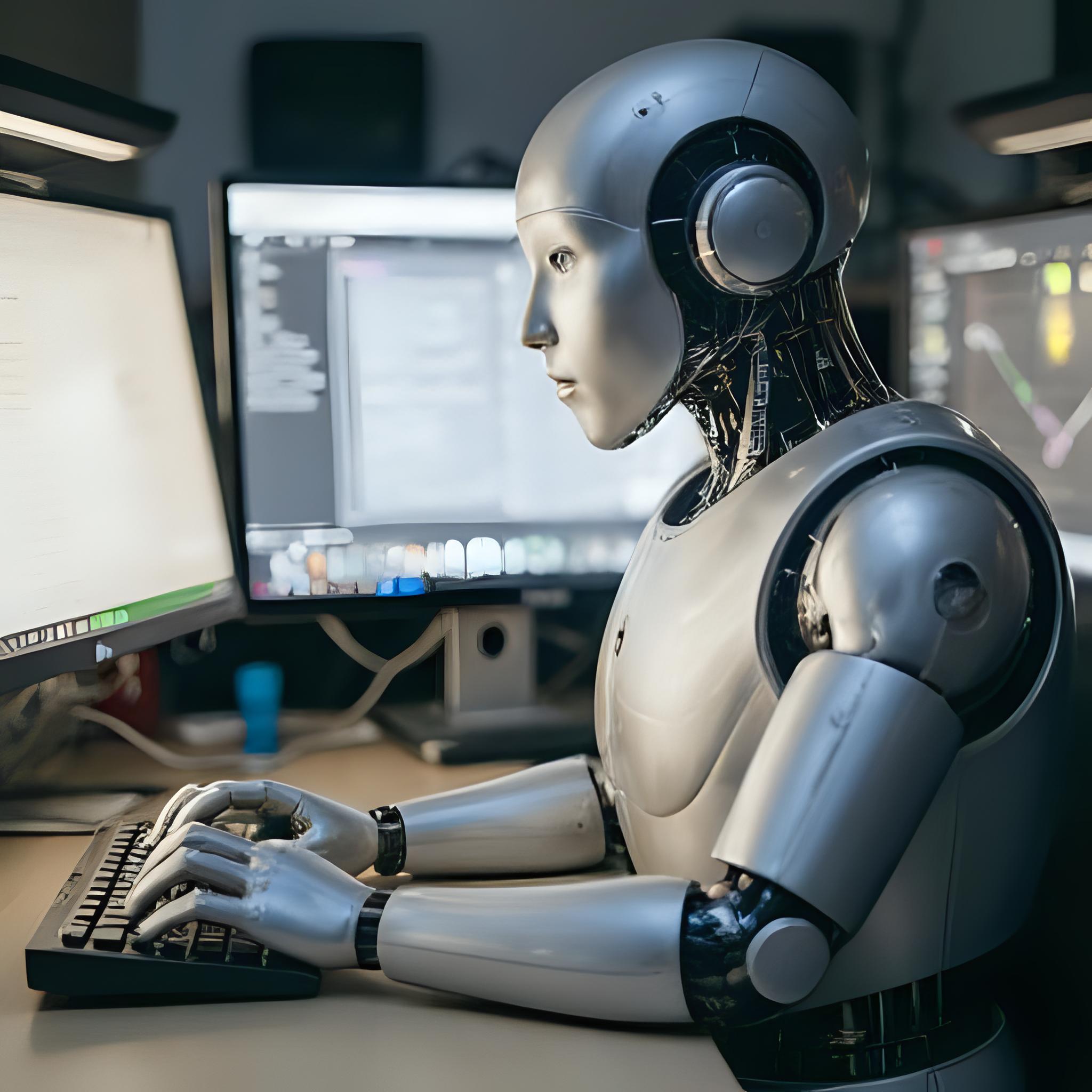
Human Touch Remains Essential in Copywriting
by Denis Panji

Many people are talking about Artificial Intelligence. They worry that AI will take over jobs, especially for writers. This raises an important question: can a machine truly replace a human copywriter?
AI tools are very fast and helpful. But great writing needs more than speed. It needs a human touch to connect with people. This article will explore why the human element is still the most important part of writing.
Why Human Writers Are Still Needed
1. Real Ideas vs. Repeated Patterns
AI is very good at repeating what it has already seen. It learns from billions of examples from the internet. However, it cannot create a truly new or original idea from nothing.
Human writers, on the other hand, can think of completely fresh ideas. They use their imagination and life experiences. This creativity is something a machine cannot copy.
2. Understanding Feelings
Good writing often connects with people's feelings. To do this, a writer must truly understand emotions like happiness, sadness, or frustration.
AI can be taught to use emotional words, but it does not feel anything. It's like an actor reading lines without understanding their meaning. A human writer connects with feelings in a real way.
3. Knowing Local Culture
Every place has its own unique culture and ways of speaking. A message that works in one country might be strange or offensive in another.
AI often misses these small but important details. A human writer understands local culture because they live in the world. They can write a message that feels natural and respectful to the local audience.
4. Building a Brand's Personality
A brand's voice is its personality. It shows what the brand believes in and how it talks to customers. This personality is built over time with careful thought.
AI can be told to write in a certain style. However, it cannot manage or grow that personality over the long term. A human writer thinks about the brand's future and makes sure its voice stays strong and consistent.
Solving Unexpected Problems
Marketing is full of surprises. Sometimes, a plan needs to change very quickly. A human writer can adapt and think of new solutions when faced with an unexpected challenge.
AI can only follow the instructions it is given. When a problem is new or strange, the AI gets stuck. It needs a human to figure out what to do next.
Making Good and Fair Choices
Writing has the power to influence people. This means writers have a responsibility to be fair and honest. They must think about whether their words could be harmful.
An AI does not have a sense of right or wrong. It could accidentally create content that is biased, unfair, or inappropriate. A human writer is needed to make moral judgments and ensure the message is responsible.
Tips for Human Copywriters Thriving in the AI Era
1. Learn to Give Good Instructions
Learning how to "prompt" an AI means learning how to ask for exactly what you want. When you get good at this, the AI becomes a powerful tool that helps you write better and faster.
2. Focus on the Big Picture
Let the AI handle simple writing tasks. This frees up your time for more important work. You can focus on planning the main goals.
Your job becomes less about writing every single word and more about thinking like a leader. You decide the main idea and the overall strategy, like a captain steering a ship.
3. Become an Expert in One Area
Choose one specific topic or industry and learn everything about it. For example, become an expert in health technology or sustainable fashion.
AI has general knowledge, but it is not a true specialist. Clients will always need a human expert for deep knowledge and specific advice. This makes your skills very valuable.
4. Be Good with People
Skills like understanding people, thinking carefully, and communicating clearly are more important than ever. These are things that only humans can do well.
Building good relationships with clients is key. AI can write text, but it cannot build trust or understand a client's real needs. Your ability to connect with people is a major strength.
5. Always Keep Learning
The world of technology changes very quickly. New tools and ideas appear all the time. It is important to stay curious and keep learning. Be open to changing how you work. By staying updated, you will not be left behind. You will always be prepared for what comes next.
Conclusion
The idea that AI will completely replace writers is not the full story. AI is a tool that can help us. It makes routine tasks easier and helps us work faster. However, it cannot do what humans do best.
Our job as writers is changing. We are not just writing words anymore. We are now the thinkers and strategists who guide the AI. The future is not about humans versus machines. It is about humans and machines working together.
FAQs
Will AI take my job as a copywriter?
It is more likely that AI will change your job, not take it away. Think of AI as a new assistant. It can handle the simple and repetitive parts of your work. This frees you to focus on the things only a human can do: thinking of big ideas, understanding feelings, and making smart plans.
How can human writers stay valuable with AI around?
You can stay valuable by focusing on your human strengths. These are the skills that AI does not have. This includes true creativity, understanding people's feelings, knowing local culture, and making fair, responsible choices. Also, get good at giving AI clear instructions to make it a better tool for you.
What does the future look like for human writers?
The future is about partnership. Human writers will be the leaders or "directors." They will create the main strategy and the core story. Then, they will use AI as a tool to handle the faster, simpler tasks. It is a team model where the human leads and the AI assists.
Can AI understand a brand's personality?
AI is good at copying. If you show it many examples of a brand's writing, it can learn to imitate that style. However, it cannot truly create a new personality or make it grow over time. It lacks the deep understanding and long-term vision that a human writer uses to build and manage a brand's unique voice.